
Szczecin Venice – the industrial symbol of Szczecin on the Oder
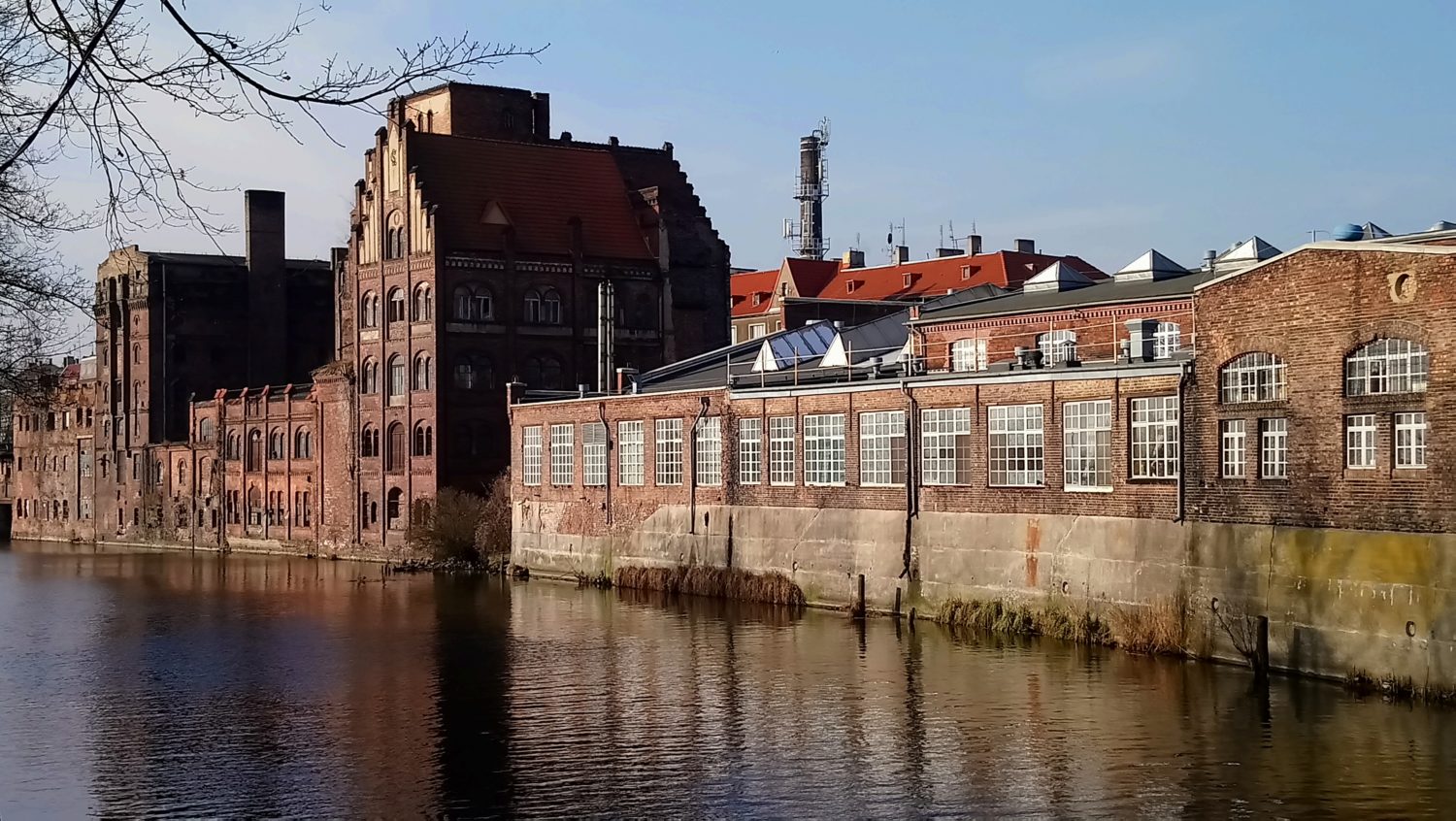
The Industrial Amphitheater and the History of Columbus Street
Although the name suggests romantic gondolas and baroque palaces, Szczecin's Venice is a place of entirely different, almost Dickensian gravity. Standing on the waterfront on Kolumba Street (formerly Columbusstraße), you gaze not at marble but at monumental brick architecture rising directly from the river's surface. This is where the historic heart of industrial Szczecin beats, enclosed within a complex of 19th-century factories and warehouses that survived Allied bombing to become one of the city's most photogenic, though still austere, attractions. The whole creates a unique amphitheater of utilitarian architecture, where every ramp and window served its precise purpose within the port city's vast machinery.
Architecture on the Odra River: historic factories on the water
A key element of this landscape are the buildings of the former C. Lefebre spirits and yeast factory and the adjacent wine and juice factory. Their facades, rich in neo-Gothic detail, appear to "float" thanks to the unique foundations placed on wooden piles driven deep into the riverbed. The narrow isthmus separating the mainland from the islands creates a natural channel, where the Oder reflects rhythmic rows of windows and turrets. In its heyday, the area was a constant hustle and bustle. Barges moored directly at the unloading ramps, and the smell of fermenting fruit mingled with the smoke from the factory chimneys. The construction of these buildings is a masterpiece of Prussian engineering: clinker brick, wrought iron, and stone lintels create a structure that, despite decades of neglect, still commands respect with its solidity.
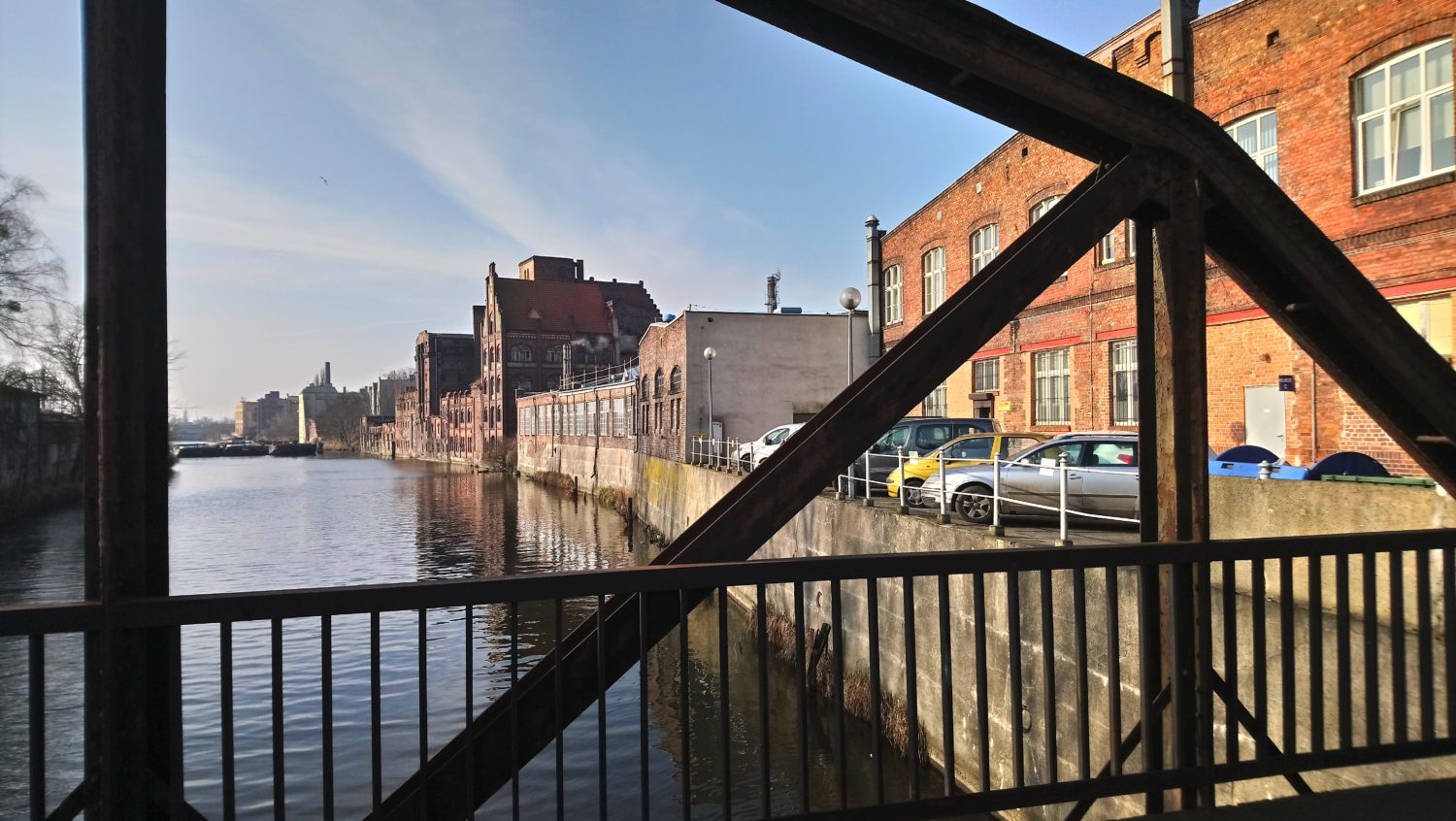
The legacy of old Stettin and the Lefebre family
This architecture is a testament to the power of the former Stettin (the German name for Szczecin), which, as one of the most important Baltic ports, could not waste a single centimeter of waterfront space. In building their yeast empire, the Lefebre family opted for an aesthetic worthy of city halls, a characteristic of the industrial architecture of the time. Today, strolling along the river, you can almost physically feel the passage of time. Flaking plaster reveals dark red brick, and wrought iron supports recall the skill of the craftsmen who combined austere functionality with elegance. It was here, in the shadow of the brick walls, that the fate of local trade was decided, and goods from here were shipped to the farthest reaches of the German Empire.
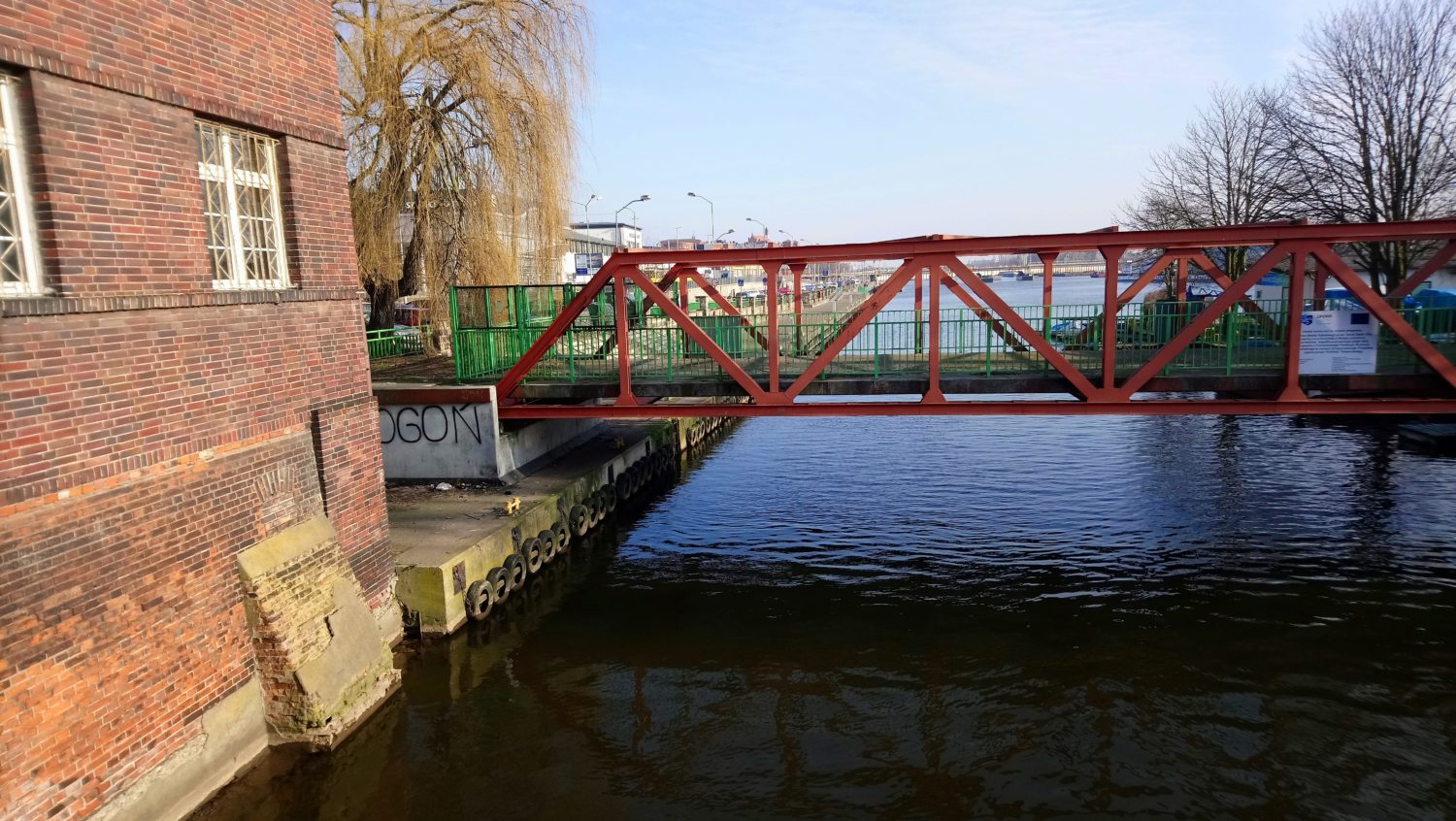
Interesting facts about Venice of Szczecin
Pile foundations : technical documentation (including the monument's White Papers) clearly confirms that the buildings are supported by oak piles. As long as they are completely underwater and airtight, they do not rot, but rather harden, becoming as hard as rock. This is the same construction technique used to build the Basilica of Santa Maria della Salute in the real Venice.
Wartime survival : While 90% of Szczecin's Old Town was destroyed in 1944 by air raids, the Szczecin Venice survived almost intact. Historians attribute this to its remoteness from major strategic targets and the robustness of its structure.
Yeast Factory : One of the oldest buildings belonged to the C. Lefebre company, which revolutionized alcohol production in the region in the 19th century. Interestingly, the yeast produced here was considered among the best in Central Europe.
Film set : The stark, dark atmosphere of the waterfront attracts film crews. It was here that scenes from historical films were filmed, with Szczecin's buildings "representing" the ports of northern Europe during the Industrial Revolution.
Opening Hours and Availability
Accessibility : The waterfront area and the view from the Swallow Bridge and Kolumba Street are accessible 24 hours a day, 365 days a year.
Kayak season : If you want to see the buildings from the water (the best perspective), kayak rentals usually operate from April to October (excluding public holidays like January 1.01, January 6.01, December 25.12).
Practical information: sightseeing and logistics
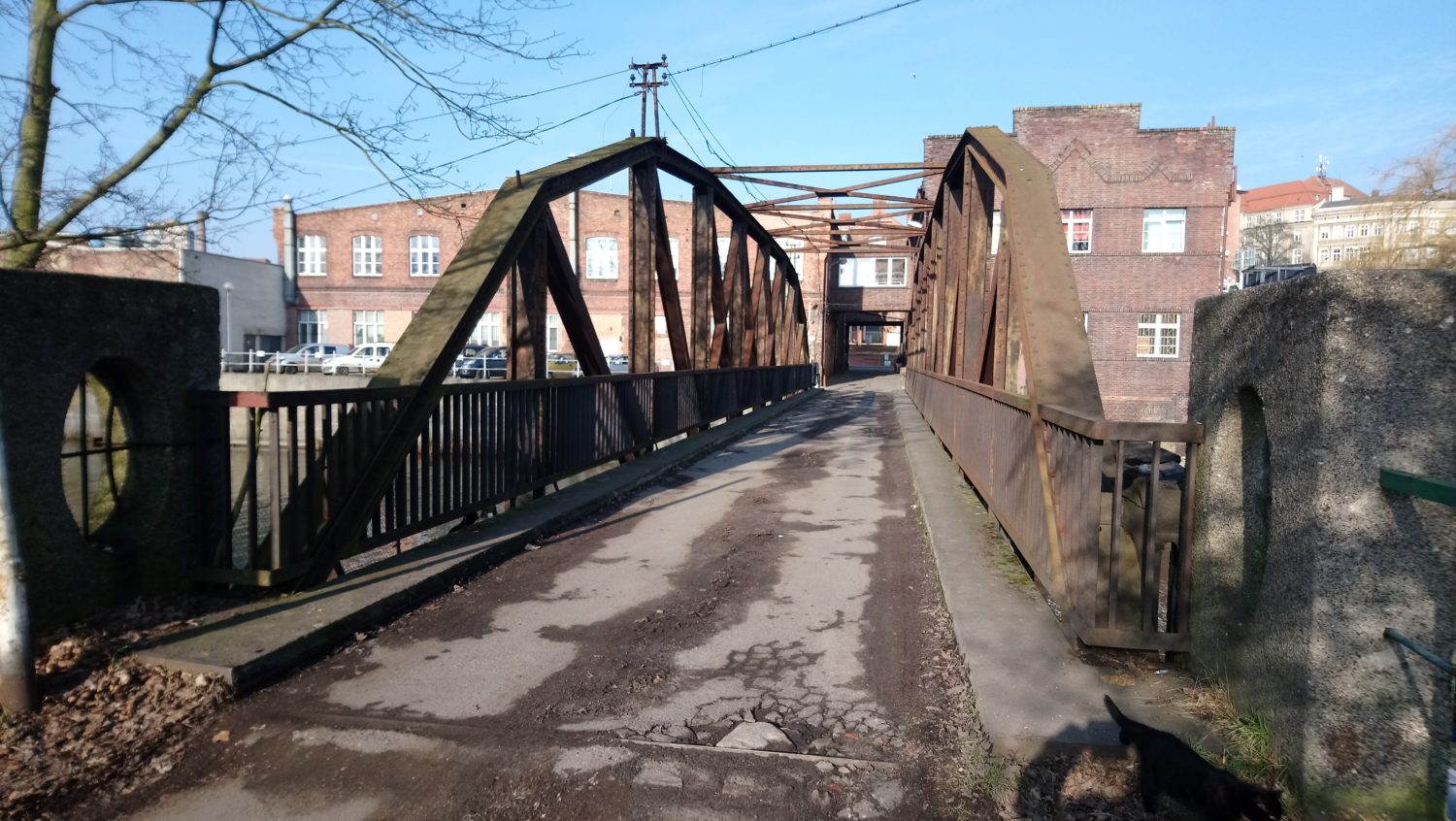
Best Viewpoint : Head to the Sperlingsbrücke Bridge. This is where you'll get the most classic view of the factory buildings rising directly out of the water.
Swallow Bridge, GPS coordinates:
53°25’02.7″N 14°33’01.4″E
53.417428, 14.550375 - click and route
Tour time : Allow approximately 45-60 minutes for a stroll along the waterfront and a photo session. If you plan to kayak, add at least 2 hours.
For those arriving by train, the location is exceptionally convenient, being just 100 meters from the train station.
More source materials documenting the history, architecture and current state of Szczecin Venice:
Official Registers and Documentation of Monuments
Monument Card : Former O. Lefevre Spirit, Liqueur and Yeast Factory Complex – portal of the National Heritage Institute (NID), containing details about conservation protection and the history of the factory (1899–1905).
Monument Card : The former tram depot complex and Swallow Island – information about the adjacent industrial complex, which also forms the landscape of Szczecin Venice.
List of monuments of the West Pomeranian Voivodeship (City of Szczecin) – official list (PDF), confirming the entry in the register (item A-861) of buildings at Kolumba Street and on Jaskółcza Island.
For the curious: a film from the exploration of the buildings of Venice of Szczecin
Important to me!
Give the article a good rating (5 stars welcome 😀)!It's free, a for me it is very important! The blog lives on visits and thus has a chance to develop. Please do it and ... thank you in advance!
If you like my guides, you will certainly find the one I created useful guide catalog - [click]. There you will find ready-made ideas for your next trips, descriptions of other tourist destinations and an alphabetical list of guides divided into countries, cities, islands and geographical regions.
I also post link to Facebook profile - [click]. Come in and press "Follow"then you will not miss new, inspiring posts.
Unless you prefer Instagram. I'm not a social media demon, but you can always count on something nice to look at on my instagram profile - [click]. The profile will gladly accept any follower who likes it.
I read ALL the comments (and many times). Under each of them I could write that Thank you very much, because you are real fantastic. I often come back to comments because they give me motivation and energy. For me this is invaluable a treasure trove of good emotions!
Thank you for this here (I don't want to clutter the comments with repeated thanks). Know that by leaving a kind word here, you are doing a really good job for me!
I make the content I create available free of charge with copyright, and the blog survives from advertising and affiliate cooperation. So, automatic ads will be displayed in the content of the articles, and some links are affiliate links. This has no effect on the final price of the service or product, but I may earn a commission for displaying ads or following certain links. I only recommend services and products that I find good and helpful. Since the beginning of the blog's existence, I have not published any sponsored article.
Some of the readers who found the information here very helpful, sometimes ask me how you can support the blog? I do not run fundraisers or support programs (type: patronite, zrzutka or "buy coffee"). The best way is to use links. It costs you nothing, and support for the blog is self-generating.
Pozdrawiam